
Dental Implants vs Dentures: Which Is Better for You?
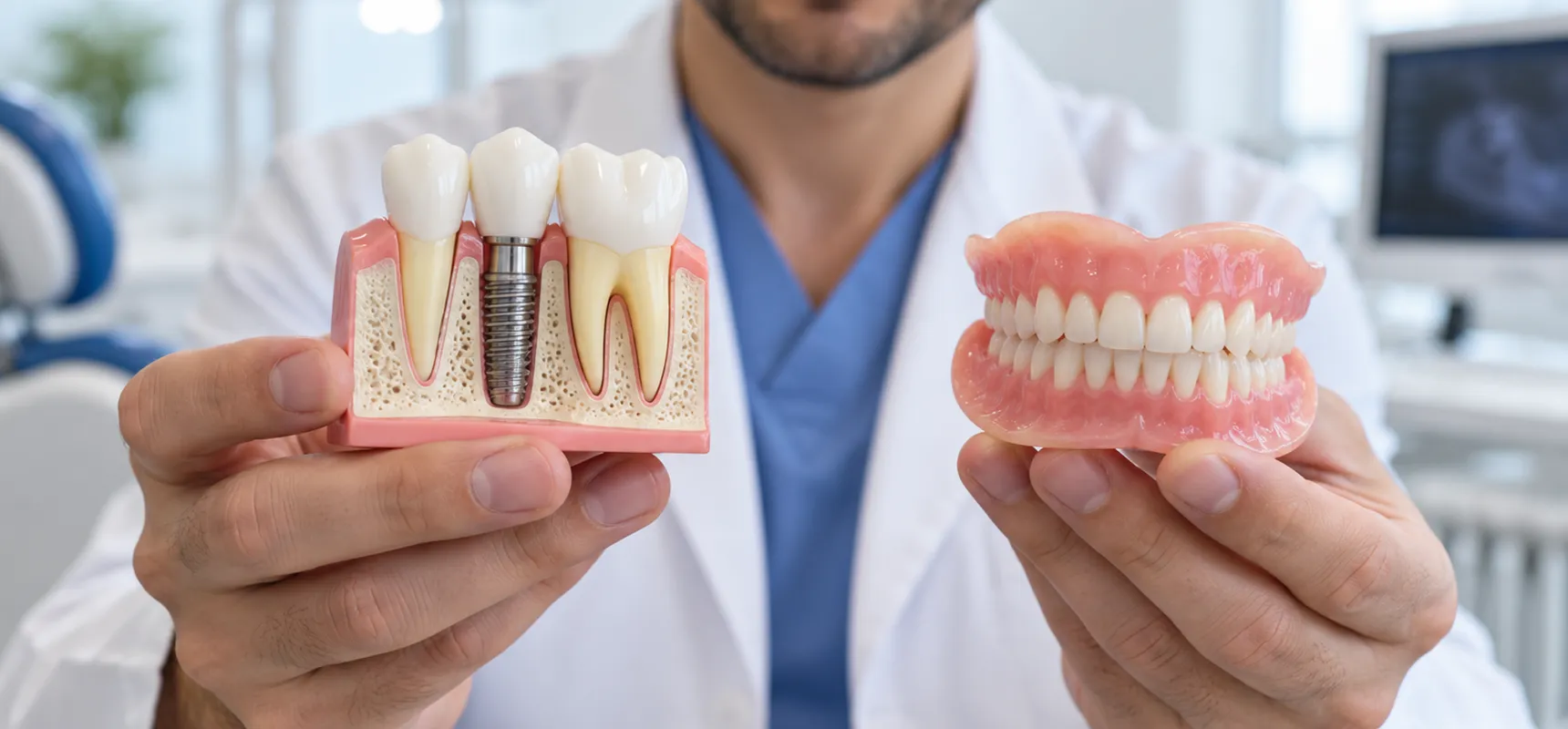 Losing one or more teeth is a deeply personal experience, and the path back to a confident, functional smile looks different for everyone. If you’ve been researching tooth replacement options, you’ve likely found yourself weighing two of the most common solutions: dental implants and dentures. Both can restore your ability to eat, speak, and smile comfortably — but they work in very different ways, and the “better” choice depends on your unique health history, lifestyle, and goals.
At GLO Dental Studio in Waukesha, WI, we believe every patient deserves a clear, honest comparison before making a decision this important. Below, we walk through the key differences between implants and dentures so you can walk into your consultation feeling informed and confident.
What Are Dental Implants?
A dental implant is a small titanium post that is surgically placed into the jawbone, where it fuses with the bone over time through a process called osseointegration. Once healed, a custom crown is attached on top, creating a replacement tooth that looks, feels, and functions much like a natural one. Implants can replace a single tooth, several teeth, or — through techniques like All-on-4 — an entire arch. You can explore the full scope of dental implant options at GLO Dental Studio to understand which approach may suit your situation best.
What Are Dentures?
Dentures are removable prosthetic appliances designed to replace missing teeth and surrounding gum tissue. Full dentures replace an entire arch of teeth, while partial dentures fill gaps when some natural teeth remain. Modern dentures are custom-fitted and crafted from high-quality materials for a more natural look and comfortable fit than older generations of patients may remember. GLO Dental Studio offers tailored denture services using the latest technology to achieve both aesthetics and functionality.
Key Differences: A Side-by-Side Look
Stability and Comfort
Dental implants are anchored directly into the jawbone, which means they don’t shift, slip, or require adhesive. Many patients describe them as indistinguishable from natural teeth during everyday activities like eating and speaking. Dentures, while significantly improved in modern design, are removable and can occasionally move during use — particularly as the jawbone changes shape over time. Well-fitted dentures from an experienced practice minimize this, but some adjustment period is normal.
Bone Health
One of the most clinically meaningful differences between the two options is their effect on the jawbone. When a tooth root is lost, the bone beneath it no longer receives the stimulation it needs and can gradually diminish — a process called bone resorption. Dental implants replicate the function of a tooth root and help preserve jawbone density over time. Dentures rest on top of the gum tissue and do not provide this same stimulation. In some cases, patients considering implants may first need a dental bone graft to rebuild sufficient bone volume for implant placement.
Longevity and Maintenance
With proper care, dental implants are designed to be a long-term solution. They are cleaned just like natural teeth — brushing, flossing, and routine dental visits. Dentures, on the other hand, require daily removal and cleaning, and they typically need to be relined or replaced every several years as the shape of the jaw and gums changes. The upfront investment for implants is generally higher, but many patients find the long-term value compelling when factoring in the reduced need for replacements and adjustments.
Candidacy and Timeline
Not everyone is an immediate candidate for dental implants. Sufficient jawbone density, healthy gums, and good overall health are important factors. The implant process also involves a healing period between the surgical placement and the final crown, which can span several months. Dentures, by contrast, can often be delivered more quickly and do not require surgery, making them an accessible option for patients who need a faster solution or who may not be candidates for implant surgery.
If you’re wondering whether you might already be experiencing signs that point toward implants, the sibling post Signs You Need a Dental Implant: Don’t Ignore These covers common indicators worth knowing. And if you’re leaning toward implants, What to Expect During Dental Implant Surgery and How to Care for Dental Implants After Surgery in Waukesha offer helpful preparation and aftercare guidance.
Which Option Is Right for You?
There is no single answer that fits every patient. Dental implants tend to be a strong fit for patients who want a permanent, low-maintenance solution and have the bone structure to support them. Dentures may be the better starting point for patients who need a quicker timeline, have experienced significant bone loss, or are working within a tighter budget. In some cases, implant-supported dentures — which combine the stability of implants with the coverage of a denture — offer a compelling middle ground.
The most important step is a thorough evaluation. At GLO Dental Studio, we use advanced imaging technology, including CBCT scans, to get a precise, three-dimensional picture of your jaw structure — information that is essential for planning implant placement accurately and safely. Our team reviews your full oral health picture before making any recommendation, so you can trust that any plan we discuss is genuinely tailored to you.
If cost and coverage are part of your decision, our financial options page outlines the ways GLO Dental Studio works to make care accessible, including our in-house dental membership plan.
Frequently Asked Questions
Are dental implants painful?
Most patients report that the implant procedure itself is more comfortable than they anticipated. Local anesthesia is used during placement, and sedation options are available for patients who prefer additional relaxation. Some soreness during the healing period is normal and typically manageable with over-the-counter care.
How long do dentures last?
Traditional dentures generally last between five and ten years before they need to be replaced or significantly relined. As the jawbone changes shape over time, the fit of a denture can shift, which is why regular follow-up visits are important even after your dentures are placed.
Can I get implants if I’ve worn dentures for years?
Possibly, yes — though long-term denture wear is often associated with bone loss, which may require a bone graft procedure before implants can be placed. A thorough evaluation with imaging will determine whether you have sufficient bone volume or whether preparatory treatment is needed first.
Is one option significantly more expensive than the other?
Dentures typically have a lower upfront cost than dental implants. However, when accounting for the ongoing costs of denture adhesives, relining, and eventual replacement, the long-term financial picture can be more comparable than it first appears. Our team is happy to walk through cost considerations during a consultation.
What if I’m not sure which option is right for me?
That’s exactly what a consultation is for. Our team will review your dental and medical history, take any necessary imaging, and have an open conversation about your goals, concerns, and budget before recommending anything. There’s no pressure — just information to help you decide with confidence.
Ready to take the next step? The team at GLO Dental Studio in Waukesha, WI is here to help you explore your tooth replacement options in a comfortable, judgment-free environment. Call us at 262-875-3304 or visit our contact page to schedule your consultation today.